
AR in Healthcare
Deploying augmented reality across live healthcare, retail, and social care environments where reliability and accessibility were critical.
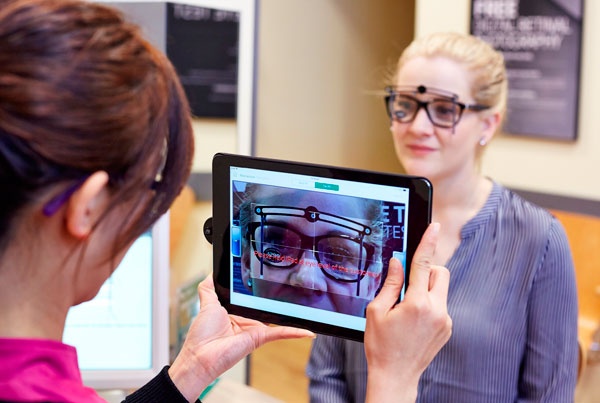
We worked across a series of healthcare and wellbeing initiatives involving Specsavers, Connection in Mind, Musikind, and Healthbus Trust. Each programme relied on augmented reality as part of day-to-day service delivery, making reliability, accessibility, and predictable behaviour critical.
These platforms were not experimental. They were used in live healthcare, retail, and social-care environments where continuity, trust, and clarity mattered more than novelty.
Situation and context
Each organisation faced the same underlying challenge: how to deploy immersive technology in sensitive, real-world settings without increasing friction or operational risk. In many cases, traditional engagement methods were no longer effective, while technical complexity and user vulnerability raised the stakes for failure.
Delivery required stable systems that could operate consistently across devices, environments, and user capabilities, often under constrained conditions and without tolerance for disruption.
We assumed operational responsibility for stabilising and delivering AR-based systems suited to each context. For Specsavers, this meant ensuring virtual try-on technology performed reliably across retail and mobile environments. For Musikind and Connection in Mind, it required dependable, low-friction experiences appropriate for dementia care and youth mental health programmes.
In healthcare outreach settings, including Healthbus Trust, delivery focused on robustness, accessibility, and calm interaction, ensuring systems could be trusted during high-stress use without technical overhead.
Operational insight
Lightweight operational reporting was introduced to provide confidence without adding complexity. Metrics focused on system behaviour, repeat engagement, and reliability rather than surface-level interaction counts.
This allowed clinicians, funders, and internal teams to understand how systems were being used in practice, identify risk early, and maintain confidence that the technology supported frontline care rather than disrupted it.